

If your toddler does not follow along in class, it can feel worrying in the moment. You may wonder if she is too young, not interested, or somehow missing out. The reassuring truth is that this is often completely normal.
Toddlers learn in different ways. Some jump right in, some watch first, and some need time to warm up before they join. In a good toddler class, all of those responses are okay.
At Girl Pow-R’s Toddlers and Tots program, the goal is to make class feel safe, playful, and low-pressure so toddlers can participate in the way that feels right for them.
What If My Toddler Doesn’t Follow Along in Class?
When a toddler does not follow along in class, it does not automatically mean the class is not working. Toddlers are still learning how to enter new spaces, listen to new adults, and join group activity.
Some children need to see what is happening before they feel ready. Others may stand near a parent, hold back, or simply watch the teacher and the other children. That watching is still learning.
For parents, it helps to remember that toddler participation often looks small at first. A child may clap once, copy one movement, or step forward for part of the song. Those little moments matter.
Research from child development and arts education sources supports the idea that gentle, repeated exposure to new experiences in a supportive setting helps children build confidence over time. For a helpful parent-facing perspective, this gentle repeated exposure builds confidence in children resource explains why a slow, supportive approach works so well for young children.
Why Not Following Along Is Often Normal for Toddlers
Toddlers are not miniature older children. They have short attention spans, changing energy levels, and different comfort levels in new spaces. So if your toddler does not follow every cue, that is not unusual.
Some common reasons toddlers may not follow along right away include:
- They need time to observe: New places can feel big, and watching first helps them understand what is happening.
- They are still warming up: A child may need a few minutes, or a few classes, before joining confidently.
- They are feeling cautious: Some toddlers prefer to stay close to a parent until they feel safe.
That does not mean they are not learning. It simply means they are taking in the experience at their own pace.
What Happens in a Toddler Dance Class?
If you are wondering what to expect in a safe toddler dance class, the best classes are usually simple, predictable, and full of short activities that match a toddler’s attention span.
Common toddler class expectations may include:
- hello songs and gentle greetings
- simple movement games
- repetition and short activity bursts
- easy transitions from one activity to the next
This kind of structure helps children feel secure. It also gives them multiple chances to join in without pressure. If a child does not participate in one part of class, she may join the next.
That is one reason a good toddler class should feel playful rather than intense. The goal is comfort, not perfect participation.
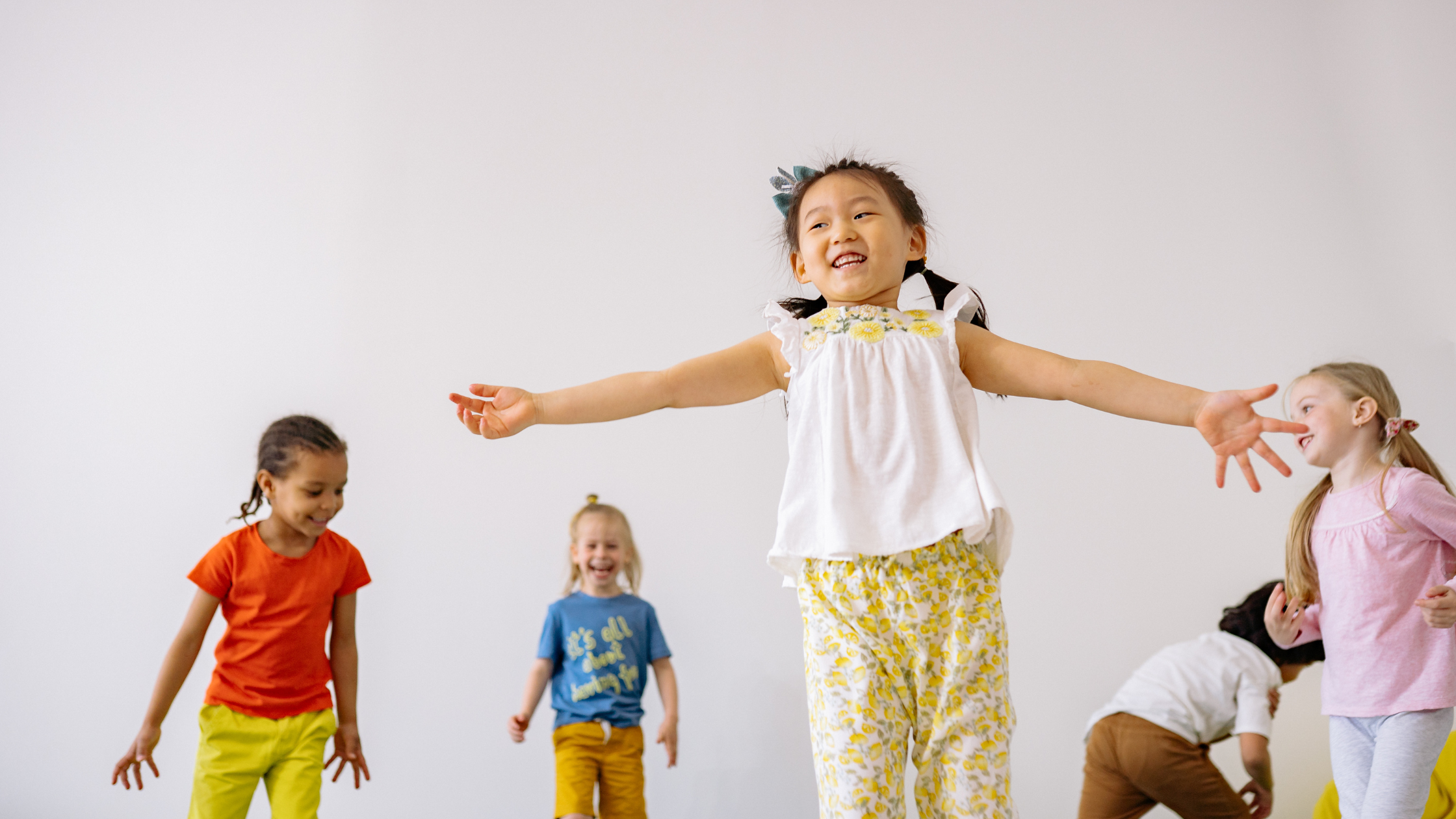
What to Do If Your Toddler Hides, Watches, or Gets Wiggly
It can be tempting to worry if your toddler hides, watches quietly, or gets extra wiggly in class. But those behaviors are very common in early childhood.
A toddler who hides may simply be getting comfortable. A child who watches may be learning by observing. A wiggly toddler may need movement and time to settle into the routine.
What matters most is that the class gives room for different temperaments. A supportive teacher will not expect every child to respond the same way at the same time.
That is why toddler dance class tips often focus on patience, routine, and gentle encouragement rather than quick results.
For families looking for a reminder about early childhood readiness, this critical window for creative confidence in ages 3–5 resource notes that young children benefit from process-based learning, not perfect performance.
How a Supportive Class Helps Your Toddler Feel Ready
A supportive class can make a big difference when a toddler does not follow along in class right away. In the right environment, children get to watch, warm up, and join gradually.
That kind of class helps toddlers:
- feel safe in a new space
- learn the routine through repetition
- build comfort with the teacher and group
- take small steps toward participation
It also helps parents feel more confident. When you know the class is age-appropriate and gentle, it is easier to relax and let your child learn at her own pace.
This is one reason many families look for a safe toddler dance class that understands early childhood learning.
Why Girl Pow-R’s Toddlers and Tots Is a Gentle First Step
Girl Pow-R’s Toddlers and Tots program is designed to support shy, cautious, and slow-to-warm children. The pacing is gentle, the routines are predictable, and the environment is built around comfort and exploration.
That matters because toddlers do best when they are not rushed. A child does not need to follow every step perfectly to benefit from class. She just needs the chance to observe, try, and build trust over time.
Girl Pow-R understands that children learn differently. Some join right away, and some need more time. Both are okay. The goal is to create a setting where every child feels welcome.
For parents exploring what happens in a toddler dance class, this kind of supportive structure is often exactly what helps a toddler become more comfortable over time.
What Parents Can Say and Do After Class
After class, a calm and encouraging conversation can help your child feel positive about the experience, even if she did not follow along much.
Try simple support like:
- Praise effort, not performance: Notice small moments like watching, clapping, or trying one movement.
- Keep expectations gentle: It is okay if she needs time.
- Talk about class positively: Focus on what she saw, heard, or enjoyed.
These small habits help your toddler feel safe enough to keep trying. Over time, comfort often grows into participation.
When to Give It More Time
Sometimes the best thing to do is simply give your toddler more than one class. New settings can take time to feel familiar.
If your child watches for a few sessions before joining, that can still be a good sign. It shows she is observing, learning, and building trust in the space.
A toddler does not have to be instantly outgoing to be ready. In fact, many children bloom slowly, and that is perfectly normal.
That is why the best toddler dance and movement programs are patient, playful, and welcoming.
For another parent-facing perspective on how early music learning supports development even when a child is quiet or simply observing, this music learning improves physical, cognitive, emotional, and social development resource is a helpful reminder that participation can take many forms.
And for families who want to understand how children often learn at their own pace, this children learn to sing and dance as naturally as they learn to walk and talk resource reinforces that slow, supported participation is completely normal.
Conclusion: Not Following Along Is Not a Failure
So, what if your toddler does not follow along in class? In many cases, it simply means she is learning in her own way and her own time.
Toddlers grow through observation, repetition, and small steps. A child who watches first or joins only partway is still making progress.
If you want a warm, safe, and age-appropriate toddler dance class that helps your child ease into movement, routine, and joyful participation at a comfortable pace, Toddlers and Tots can be a lovely next step.