
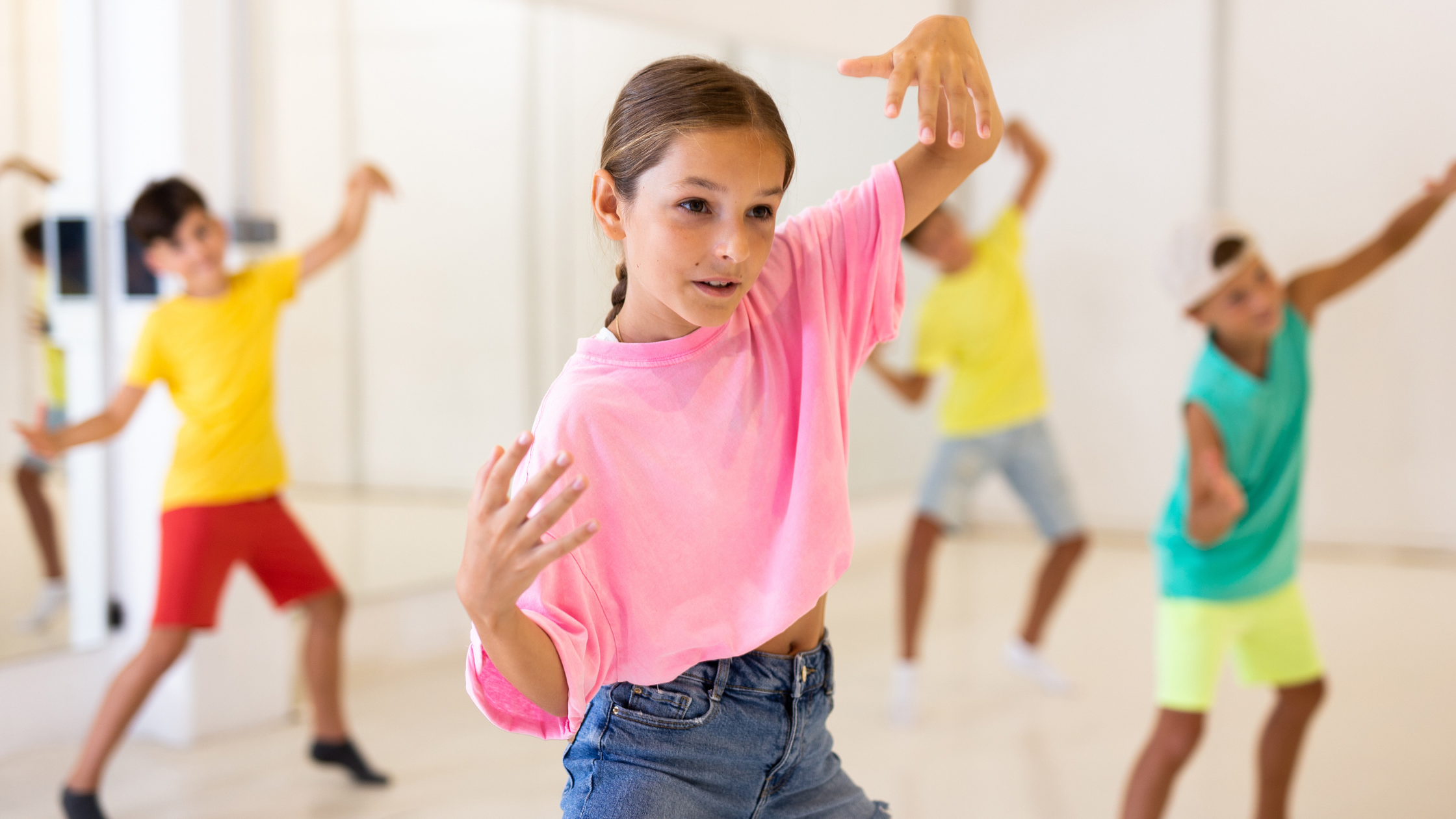
What Are the Most Effective Dancing Tips for Beginners?
The most effective dancing tips for beginners focus on building rhythm, posture, timing, and emotional expression — the foundational skills that turn nervous first-timers into confident performers. Dance is a performing art designed to connect with a live audience, which means technique alone is never enough. Programs range from traditional studio lessons to performance-focused academies like the Pop Star Performance Academy — the training school connected to the JUNO-nominated all-girl pop group Girl Pow-R — where young performers aged 10 and up learn to sing, dance, and own the stage with real confidence.
How Can Young Dancers Improve Their Rhythm and Timing?
Young dancers improve their rhythm and timing by actively listening to the music, counting beats out loud, and practicing consistently with songs they already love. Rhythm is not an innate talent reserved for a lucky few. Dancers develop it through repetition, focused listening, and a deeper understanding of musical structure. Starting with familiar pop songs makes the process feel natural and enjoyable, which keeps beginners motivated long enough to develop real technique.
The Connection Between Music and Movement
Understanding how music works is a genuine cognitive skill. As a bassist with the Hawaiʻi Symphony Orchestra explained in Honolulu Magazine, “Music helps us to understand ourselves, and how to communicate, work and interact with others… When kids are learning how to read music at an early age, they’re unlocking an understanding of a coordinate system.” That connection between musicality and broader learning is exactly why structured rhythm training matters from the very beginning.
Learning Through Integrated Performance Training
At the Pop Star Performance Academy — the training school connected to Girl Pow-R — this philosophy is built into how students learn. Girl Pow-R’s members sing, dance, and play instruments simultaneously, which means musicality and movement are always taught together rather than in isolation. Students don’t just follow choreography; they learn to feel the music underneath it.
Daily Habits That Strengthen Timing Skills
Here are some practical ways beginners can start building rhythm right away:
- Count out loud while you move. Saying “1, 2, 3, 4” as you step helps your brain and body sync up faster than watching alone.
- Clap along to your favorite songs. Finding the beat in music you already enjoy makes the exercise feel natural, not like homework.
- Practice with a mirror. Visual feedback helps you spot when your movement is landing ahead of or behind the beat.
- Start slow, then build speed. Slowing a song down (many apps allow this) lets you lock in the timing before adding full energy.
- Repeat short sections. Working on an 8-count phrase repeatedly builds muscle memory far more effectively than running through a full routine once.
Why Is Stage Presence Just as Important as Technique?
Stage presence is the ability to hold an audience’s attention through expression, energy, and intention — and for young performers, it is just as important as executing choreography correctly. A dancer who hits every step but stares at the floor or performs with a blank face will lose the audience. Stage presence transforms a technically correct performance into a genuinely memorable one, and it is a skill that can be learned and practiced like any other.
Confidence Grows Through Repetition and Exposure
The difference shows up clearly in real performance environments. As one arts program director noted in Honolulu Magazine, “I’ve seen kids who are terrified when they walk in the door and then act like they own the place by the end.” That transformation — from self-conscious to commanding — is what consistent, audience-focused training produces.
Lessons From Professional Performance Experience
Girl Pow-R is a clear real-world example of this principle in action. The group has performed 450+ shows since forming on International Women’s Day in 2017, touring across Canada and completing two US tours to cities including Boston, New York, Philadelphia, Washington DC, Minneapolis, Kansas City, Oklahoma City, Dallas, and Houston.
Performing to audiences of thousands at each stop demands far more than technical accuracy. It requires genuine stage presence: sustained eye contact with the crowd, facial expressions that match the song’s emotion, and the physical energy to hold attention from the first note to the last.
These are skills their members have developed through real, repeated performance experience, and they are the same skills taught at the Pop Star Performance Academy.
Developing a More Engaging Performance Style
Here are actionable dancing tips to build stage presence from your very first rehearsal:
- Make your face match the song. If the song is joyful, smile. If it’s powerful, project that through your expression. Neutral faces read as disengaged from the audience’s perspective.
- Pick a focal point. Rather than staring at the floor, choose a point at the back of the room and return to it between movements.
- Use your whole body. Energy in the arms, head, and upper body communicates to an audience far more than footwork alone.
- Perform, don’t just execute. Think about what the song means and let that intention drive your movement, not just the choreography steps.
- Record yourself. Watching playback is one of the fastest ways to identify where your energy drops or your expression goes flat.
What Are the Best Ways to Overcome Stage Fright?
Stage fright is one of the most common barriers young dancers face, and the most effective ways to overcome it include controlled breathing, positive visualization, gradual exposure to performance settings, and training in a genuinely supportive environment. The fear of performing is normal — even experienced performers feel it — but it becomes manageable when students are given the right tools and the right community around them.
Why Environment Matters for Confidence
The psychological side of performance training is often overlooked in beginner dancing tips, but it is central to long-term growth. As highlighted in Honolulu Magazine, group-based performing arts environments actively build “self-esteem, self-expression, self-awareness” — outcomes that directly reduce the grip of stage fright over time. When a student feels genuinely supported by their peers and instructors, the performance space stops feeling threatening and starts feeling exciting.
Creating a Culture of Encouragement
The Pop Star Performance Academy — connected to Girl Pow-R — is built around exactly this kind of environment.
Girl Pow-R itself was founded on the principle of empowering young people to be their best. Each member also champions a personal social cause such as mental health awareness, youth homelessness, or girls’ education.
That values-driven culture carries directly into how the Academy approaches student development. Rather than hoping confidence develops naturally, the Academy treats it as something worth intentionally building.
Techniques to Stay Calm Before Taking the Stage
Practical strategies for managing stage fright before and during a performance include:
- Box breathing. Inhale for four counts, hold for four, exhale for four, hold for four. This activates the body’s calm response and is easy to do backstage.
- Positive visualization. Before going on, spend two minutes mentally rehearsing a strong, confident performance rather than imagining what could go wrong.
- Rehearse in performance conditions. Practice in the actual clothes, shoes, and space you’ll perform in whenever possible. Familiarity reduces anxiety.
- Perform in low-stakes settings first. Class showcases, family performances, and small community events build the exposure habit gradually before larger stages.
- Focus on the audience, not yourself. Shifting attention outward — toward giving the audience an enjoyable experience — naturally reduces self-conscious thinking.
How Do Parents Choose the Right Dance Program for Kids and Teens?
Parents choosing a dance program for their child should look for qualified instructors, age-appropriate choreography, a supportive group environment, and a clear philosophy around student well-being — not just technical output. The right program will challenge students while making them feel safe enough to take risks, make mistakes, and grow at their own pace. For many families, the values behind a program matter just as much as the curriculum itself.
The Benefits of Structured Dance Education
According to Honolulu Magazine, learning to dance with others in a structured setting means “you’re learning how to connect… building self-esteem, self-expression, self-awareness.” These social and emotional outcomes are a meaningful part of what a quality program delivers — and they are worth asking about directly when evaluating schools.
A Values-Driven Approach to Youth Development
The Pop Star Performance Academy, connected to the JUNO-nominated group Girl Pow-R, demonstrates these values through its approach to training and student development.
Girl Pow-R’s members are young girls aged 10 to 20+. The group intentionally creates clean, positive, youth-appropriate music for young audiences. The members adopted this approach because many young performers encounter music and messaging designed for much older audiences.
That same commitment to age-appropriate, values-aligned content carries into the Academy’s approach to choreography and performance training.
Training Opportunities Across Ontario
The Academy currently operates across multiple locations in Ontario, making it accessible to families across the region:
| Location | Address |
|---|---|
| Mississauga | 1550 S Gateway Road |
| West of the Airport | 71 Delta Park Boulevard |
| North York | 245 Sheppard Avenue West |
| Toronto (Downtown) | 693 Bloor Street West |
| Etobicoke (older/experienced students) | 360 Munster Avenue |
| Richmond Hill | 13085 Yonge Street |
| Markham | 105 Riviera Drive |
| Ajax | 513 Westney Road South |
| London, Ontario | 432 Waterloo Street |
| Barrie, Ontario | 9 Innisfil Street |
| Ottawa (Opening Soon) | 250 City Center Avenue |
Questions Every Parent Should Ask
When evaluating any program, here is a practical checklist for parents to work through before enrolling:
- Ask about the instructors’ background. Do they have experience teaching children and teens specifically, not just performing themselves?
- Review the repertoire. Is the music and choreography age-appropriate? Does it reflect the values your family holds?
- Look for performance opportunities. Showcases, recitals, and community events help students build real confidence, while programs without them may limit student growth.
- Assess the group culture. Visit a class if possible. Is the environment encouraging? Do students support each other, or is it purely competitive?
- Check the age range and groupings. Programs that group students by age and experience level tend to produce better outcomes than mixed-ability classes with no structure.
- Ask about the program’s values. A school connected to a group like Girl Pow-R — one that champions mental health awareness, positive messaging, and youth empowerment — signals that student well-being is genuinely part of the mission.
Continuing the Journey Beyond the Studio
To learn more about how structured training shapes young performers, visit the Girl Pow-R website or explore related reading on how a talent development agency shapes future artists and ideas for making dance a joyful part of everyday life.